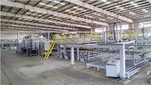
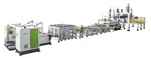
01 Single screw and twin screw comparison

02 Typical applications and case studies
1. Typical application of single screw extruder: LDPE film (low-density polyethylene)
• Material properties:
LDPE has low melt viscosity (MFI 0.2~50 g/10min), good thermal stability (decomposition temperature>300℃), is not easy to degrade during processing, and has low requirements for mixing and exhaust.
• Process adaptability:
• Simple plasticization: Single screw can achieve melt homogenization through compression section without complex shearing.
• Low shear protection: Avoid LDPE molecular chain breakage due to excessive shearing, thereby affecting the toughness of film products.
• Economical efficiency: Single screw equipment has low cost and is suitable for large-scale production of general films such as packaging films and agricultural mulch films.
• Case:
In the production of agricultural greenhouse films, the single screw extruder uses the "screw + barrier section" design to extrude the melt at a speed of 15~20 rpm, and the energy consumption is reduced by 30% compared with the twin screw.
2. Typical applications of twin-screw extruders: BOPET film (biaxially oriented polyester)
• Material properties:
PET has a high melting point (260°C), is easily hydrolyzed (requires strict drying), has a narrow processing window (270-290°C), and requires the addition of functional masterbatches such as anti-adhesive agents and antistatic agents.
• Process adaptability:
• Efficient mixing: The twin-screw meshing area forces the conveyor to achieve nano-level dispersion of additives (such as SiO₂) to avoid "crystal point" defects.
• Precise exhaust: Multi-stage vacuum exhaust (water content drops from 500 ppm to <50 ppm) to prevent hydrolysis and degradation of PET melt.
• Controllable shear: The shear rate is adjusted through the screw combination (such as the bite block angle) to avoid PET thermal oxidation (viscosity drop ≤5%).
• Case:
In the production of electronic-grade BOPET film, the twin-screw extruder adopts a "co-rotating + high-shear screw" combination to achieve melt uniformity at 290°C, and the melt viscosity fluctuation error is less than 2%.
03 Reasons for choosing single and twin screw
1. Material thermal sensitivity and processing window
• Applicable scenarios for twin screws:
When the material has poor thermal stability (such as PET, PLA) and a narrow processing temperature window (<20°C), the short residence time (1~3 minutes) and precise temperature control of the twin screw can reduce thermal degradation.
Example: PET will degrade significantly if it stays at 290°C for more than 5 minutes. The twin screw can shorten the residence time to less than 2 minutes by using a high speed of 300~500 rpm.
2. Additive dispersion and functional modification requirements
• Advantages of twin screws:
When a high proportion (>5%) of fillers (such as calcium carbonate, TiO₂) or functional masterbatches (flame retardants, anti-UV agents) need to be added, the strong shear and distribution mixing capabilities of the twin screw can avoid agglomeration.
Example: 5% nanoclay is added to high-barrier BOPET film, and the structural design of the twin screw allows it to be peeled and dispersed into a single layer (the interlayer spacing is reduced from 10nm to 1nm).
3. Process complexity and exhaust requirements
• Necessity of twin screws:
When materials contain volatiles (such as moisture, monomer residues) or require multi-stage reaction extrusion (such as grafting modification), the multi-exhaust ports and modular design of twin screws can achieve efficient devolatilization.
Example: When producing biodegradable PLA film, the twin screw reduces the moisture from 0.1% to 0.005% through two-stage vacuum exhaust (-0.08 MPa) to avoid bubbles on the film surface.
4. Trade-off between economy and production scale
• Applicable scenarios of single screws:
For general-purpose films (such as PE cling film) with low mixing requirements and large output (>1000 kg/h), the low energy consumption and low maintenance cost of single screws are more advantageous.
Example: On the HDPE shopping bag production line, the single screw extruder runs at an output of 800 kg/h, and the energy consumption per ton is 40% lower than that of the twin screw.
04 Summarize
(1) For heat-sensitive, highly filled, and modified materials, we generally choose twin screws, while for stable, single, and general materials, we generally choose single screws.
(2) In terms of process complexity, if multi-stage exhaust and shear reaction extrusion are required, we generally choose twin screws; for materials that only require simple plasticization, we choose single screws.
(3) With the rapid development of science and technology, twin screws will add new technologies such as online detection (such as infrared detection of melt uniformity) and intelligent temperature control in the future; single screws may pretend to be static mixers and barrier screw segments to improve mixing capabilities and achieve 80% of the mixing capabilities of twin screws.