With the rapid development of China's electronic chip and semiconductor industries, thermosetting materials (such as epoxy resin) are widely used in product fields such as chip packaging and circuit boards. However, these industrial wastes are difficult to recycle and reuse, making them a challenge in environmental governance.


Here we will explore the application of PVC foam board in the recycling of thermosetting materials and its important significance for environmental protection.
Features and Applications of PVC Foam Board


Light weight, high strength
The density of PVC foam board is relatively low, usually between 0.4-0.8 g/cm ³, and its strength can be adjusted according to different formulas. It is easy to process and install, suitable for making various structures and decorative materials.
Corrosion resistance
PVC foam board has excellent corrosion resistance to chemicals such as acid, alkali, and salt, and is suitable for special environments such as chemical and environmental protection.
Thermal and sound insulation
The foam structure endows it with excellent thermal and sound insulation properties, and is commonly used in building walls and sound barriers.
Waterproof and moisture-proof
PVC foam board is non absorbent and has excellent moisture resistance, making it suitable for use in humid environments such as bathrooms, kitchens, etc.
Environmentally
PVC foam board can achieve resource recycling and reduce environmental pollution by adding recycled materials such as waste plastics, circuit board powder, etc.
Processability
PVC foam board is easy to cut, drill, thermoform, and bond, suitable for various processing needs
PVC foam board is non absorbent and has excellent moisture resistance, making it suitable for use in humid environments. Its excellent performance makes it an ideal substitute for traditional materials.
Innovative Applications of Waste Thermosetting Materials in the Chip Semiconductor Industry
Thermosetting materials (such as epoxy resin) are difficult to recycle and reuse through conventional methods due to their stable chemical structure. They are usually disposed of by landfill or incineration, which not only occupies land resources but also generates harmful gases, causing secondary pollution to the environment.
Electronic chip packaging and circuit board materials contain components such as epoxy resin, glass fiber, and metal particles. Traditional processing methods are difficult to effectively separate and recycle these materials. At present, our company has added circuit board powder as a filling material to a specially formulated raw material formula for PVC foam board, which not only improves the mechanical properties of the board, but also realizes the resource utilization of electronic waste, reduces environmental pollution, lowers the production cost of PVC foam board, and creates economic value for the enterprise.


Introduction of PVC foam board extrusion line from JWELL Machinery (Changzhou) Co.,Ltd
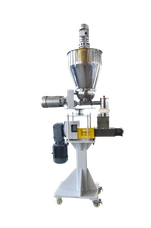
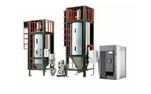
Our company specializes in providing turnkey solutions for PVC foam board projects, from raw material formulations to production equipment. The PVC foam board extrusion production line has the characteristics of good plasticization, large output, reasonable design, high precision, etc. It selects high-quality material components, mainly self-made processing, good stability, easy control, and stable extrusion production of PVC foam board products.