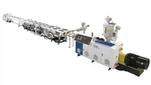
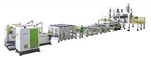
In today's social life, in the course of production, there are moments when we squeeze out opportunities to present a situation of poor plasticization. Do you know what causes this?
1、 Scorch
1. Scorch phenomenon
(1) The temperature is high, or the temperature control instrument fails, causing the plastic to burn at high temperature.
(2) The glue outlet of the machine head is full of smoke, strong pungent smell and crackling sound.
(3) Granular scorched materials appear on the plastic surface.
(4) There are continuous air holes at the glue joint.
2. Causes of scorch
(1) High temperature control causes plastic scorch.
(2) The screw has been used for a long time without cleaning, and the burnt material is accumulated and extruded with the plastic.
(3) If the heating time is too long, the plastic deposit will be heated for a long time, which will cause the plastic to age, deteriorate and burn.
(4) The parking time was too long, and the machine head and screw were not cleaned, resulting in plastic decomposition and scorching.
(5) Change the mold or color for many times, causing the plastic to decompose and burn.
(6) The head cover is not compressed, and the plastic is aged and decomposed inside.
(7) The temperature control instrument failed, resulting in high-temperature post scorch.
3. Method of eliminating scorch
(1) Regularly check whether the heating system is normal.
(2) Clean the screw rod or head regularly.
(3) Heat up according to the process requirements. The heating time should not be too long. If there is a problem in the heating system, it should be solved by relevant personnel in time.
(4) Mold change or color change shall be timely and clean to prevent mottled or burnt glue.
(5) After adjusting the mold, press the mold sleeve gland tightly to prevent glue from entering.
(6) In case of burning, clean the machine head and screw immediately.
2、 Poor plasticization
1. Poor plasticization
(1) There is a toad skin phenomenon on the surface of the plastic layer.
(2) The temperature control is low, the temperature reflected by the instrument pointer is low, and the actual measured temperature is also low.
(3) The plastic surface is dark with tiny cracks or small particles that are not well plasticized.
(4) The glue of the plastic is not sewn well, there is an obvious trace.
2. Causes of poor plasticization
(1) The temperature control is too low or inappropriate.
(2) There are resin particles in plastics that are difficult to plasticize.
(3) Improper operation method, the screw and traction speed are too fast, and the plastic is not fully plasticized.
(4) During granulation, the plastics are mixed unevenly or the plastics themselves have quality problems.
(5) The plasticizing capacity of the screw in the extruder is insufficient, and the shear force and compression force are insufficient.
(6) The compression force of the die is not enough.