Polypropylene (PP) has the characteristics of good mechanical properties, non-toxicity, good chemical stability, good heat resistance, and easy processing and molding. However, due to the influence of PP crystal size, its light transmittance and glossiness limit its application in daily necessities and transparent packaging.
After the transparent modification, the transparent PP obtained not only has the performance of traditional PP, but also makes its transparency and gloss comparable to those of commonly used transparent resins such as polystyrene resin (PS), polycarbonate (PC), polyester (PET), polyvinyl chloride (PVC), etc. Therefore, in order to improve the market value of PP, it is necessary to modify it to be transparent.
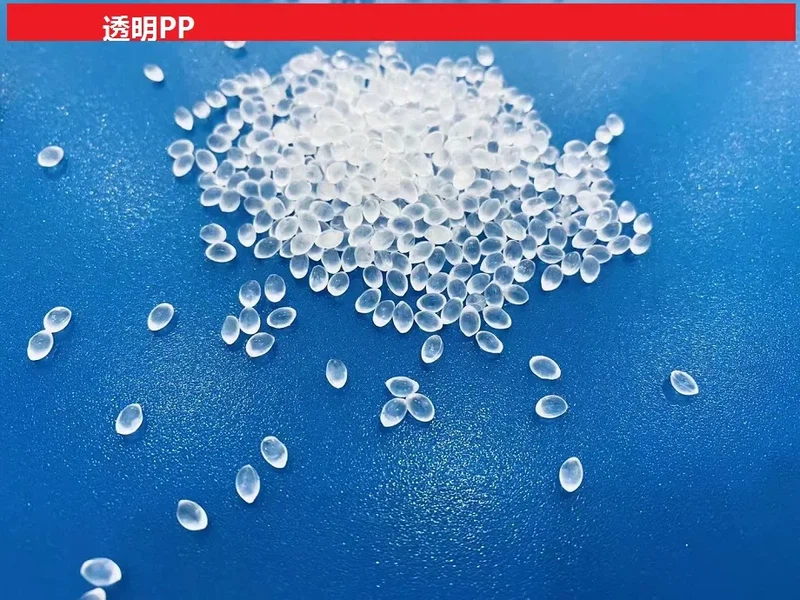
Transparent PP development process
At present, there are three main transparent PP development routes that meet the conditions for industrial scale-up production and have commercial production value:
● Use catalysts to produce transparent PP;
● Add transparent nucleating agents to modify PP;
● Blend with other resins to produce transparent PP.
Using catalyst to produce transparent PP
● Producing random copolymer PP with Z-N catalyst
The process of industrial production of ethylene-propylene random copolymer PP using Z-N catalyst is as follows:
(1) Fully mix propylene and ethylene gas;
(2) Use catalyst to obtain copolymer monomers and various monomer polymer segments;
(3) Form PP molecular chains through chain growth and chain transfer, and finally obtain random copolymer PP.
The light transmittance of random copolymer PP can exceed 94%, which is basically close to the transparency of transparent polyethylene.
●Synthesis of highly transparent PP using metallocene catalysts
The transparency enhancement effect of metallocene catalysts is better than that of Z-N catalysts. In the synthesis of transparent PP, they can control the crystallinity, molecular weight and comonomer embedding mode. Produce a mixture of isotactic and isotactic PP with high transparency and high strength.
Companies with this technology include: UnivatExxpol/Unipol technology developed by ExxonMobil, Insite/Spheripol technology developed by Dow Chemical, JPC technology developed by Mitsubishi Chemical, Mitsui technology, Spheripol and Metocene technology developed by Mitsui Chemicals, Borecene technology developed by Borealis, Univation/Unipol technology developed by Basel, Atofina technology developed by Total, and BP technology developed by British Petroleum.
Add transparent nucleating agent to modify PP
By adding a transparent nucleating agent to PP, the transparency of the product can be effectively improved. Not only that, but also its rigidity and melt flow rate can be improved.
● Transparent nucleating agent modification mechanism
The formation process of crystal structure compounds includes two stages: nucleation and crystal growth. For PP, its nucleation growth process includes heterogeneous nucleation and homogeneous nucleation. In the homogeneous nucleation method, the number of nuclei is small, the crystal size is large, and the crystallinity is low. In the heterogeneous nucleation process, the molecular chain can be adsorbed on the surface of the "impurities" of the melt to form nuclei. Under this condition, the crystallization rate is fast, the crystal size is small, and the crystallinity is high.
The transparent modifier can be considered as an "impurity". As the nucleus core of heterogeneous nucleation, it improves the heterogeneous nucleation effect in the crystallization process of PP, inhibits the homogeneous nucleation of PP, reduces the crystal size, improves the crystallinity, and reduces the scattering and refractive index of light on the crystal interface.
● Types and applications of transparent nucleating agents
① Inorganic transparent nucleating agent
Inorganic transparent nucleating agent is mainly non-metallic compounds such as talc and mica. The characteristics of this transparent nucleating agent are wide source of raw materials, low cost, and only a small amount of addition is needed to play a role in transparency enhancement. However, its disadvantages are also obvious. As inorganic compounds, they are difficult to disperse in organic melts and have a light shielding effect.
② Organic transparent nucleating agent
Among organic transparent nucleating agents, sorbitol compounds are the most widely used additives. According to the type of substituent functional groups on the benzene ring in sorbitol compounds, the development of sorbitol nucleating agents has gone through three series.
In the first series, there is no functional group on the benzene ring in sorbitol compounds, and its preparation cost is low, but the nucleation effect is poor, and aldehyde compounds will be released during use;
In the second series, chlorine, methyl and other functional groups are used to replace the hydrogen atoms on the para position of the benzene ring in sorbitol compounds. This series of sorbitol compounds increases the nucleation efficiency and transparency of the product, but still cannot solve the problem of aldehyde compound release;
The third series, first developed by Milliken, effectively solves the problem of aldehyde compound release.
Adding 0.3% of the sorbitol nucleating agent produced by Milliken Chemical Company to PP by mass fraction, the haze of PP can be reduced to less than 15%. At present, the academic community has a variety of explanations for the DBS nucleation mechanism, but no unified view has been formed.
In addition to sorbitol nucleating agents, researchers have also developed a series of organic transparent nucleating agents such as aromatic phosphate transparent nucleating agents, carboxylic acid metal salt transparent nucleating agents, dehydropolar acid and its salt transparent nucleating agents, branched acid amine transparent nucleating agents, and polymer transparent nucleating agents.
● Method of adding transparent nucleating agent
There are two ways to add transparent nucleating agents when producing transparent PP. One is to use mechanical stirring to evenly disperse the transparent nucleating agent in a container containing the reaction raw materials to ensure the uniformity of the performance of the PP product. This method is limited by the stirring intensity and will interfere with the polymerization activity, so it is not used frequently. The other is to add the nucleating agent outside the reactor during the PP granulation process, which is convenient for industrial application.
Blending with other resins to produce transparent PP
The method of increasing transmittance by blending is to use one or more polymers with a refractive index close to that of PP and a dispersed phase particle size smaller than the wavelength of visible light to blend with PP, and reduce the crystal size of PP by exerting the effect of heterogeneous nucleation, thereby increasing the transmittance of the product.
Studies have shown that low-density polyethylene and ethylene-propylene-diene copolymer are suitable blending agents. Adding 10% blending agent can reduce the crystal size of PP, increase the crystallinity, and increase the transmittance of the product. In addition, the impact performance of the product can also be improved by the effect of the blending agent. However, the method of using a blending agent to increase transmittance has obvious limitations. Since another one or more polymers are used as a mixing agent, they must have similar refractive index and interfacial compatibility with PP, which makes development very difficult.
Application areas of transparent PP
The upstream of transparent polypropylene industry chain mainly includes polypropylene, transparent nucleating agent, metallocene catalyst, etc., and the downstream is mainly used in medical devices, transparent packaging, and household items such as microwave tableware, disposable lunch boxes, and transparent beverage cups. The following table lists the application fields of transparent PP products under different processing technologies.
Processing technology and application of transparent polypropylene resin
| Processing Technology | Application Products |
| Hollow molding | Seasoning bottles, detergent bottles, water bottles, food and beverage bottles |
| Injection Molding | Household parts, joint storage boxes, storage covers, medical equipment, electronics, video boxes, protective packaging, covers, equipment parts |
| Sheet Extrusion | Video tape boxes, assembly and lunch boxes, floor coverings, hygiene products, stationery and office supplies |
| Blow molding | Water bottles, medicine bottles, dry food, spice jars, detergent bottles, baby bottles, home accessories, liquid soap, detergent boxes |
| Thermoforming | Foam packaging materials, medical trays, disposable deli trays, microwave fast food, beverage cups, disposable juice bottles, dairy box packaging, biscuit trays |
| Cast Film | Photo album cover, hygiene products, candy wrapping paper, medical film |
| Thin wall injection molding | Dairy box packaging, deli food containers, disposable beverage cups, storage containers |

At present, transparent PP products made by blow molding, injection molding, thermoforming and other processing technologies have occupied a certain market share and have a tendency to replace other competing materials. For example, currently beer and beverage bottles in the market mainly use polyethylene terephthalate (PET), and the highly transparent PP produced by AMCO through the "injection stretch blow molding" process has the potential to replace PET.
Manufacturer and brand
Currently, the world's major transparent polypropylene producers include ExxonMobil Chemical Company, Germany's Montell, BP Amoco, South Korea's SK Group, the United States' Huntsman Group, Japan's Mitsui, the Dow Chemical Company, BASF SE, Borealis Ltd., South Korea's Samsung Group, the Netherlands' Basel Company, Japan's JPP, and South Korea's Daelim.

Photo taken at the SK Chemicals booth
From a domestic perspective, there are currently very few polyolefin companies using coal chemical technology that produce transparent polypropylene, and the production of transparent materials is basically carried out by a few joint ventures.

Comparison of transparent material and drawing material Source: Sinochem

Dongming Petrochemical's HC8016 grade is used in infant feeding bottles. Image source: Dongming Petrochemical