

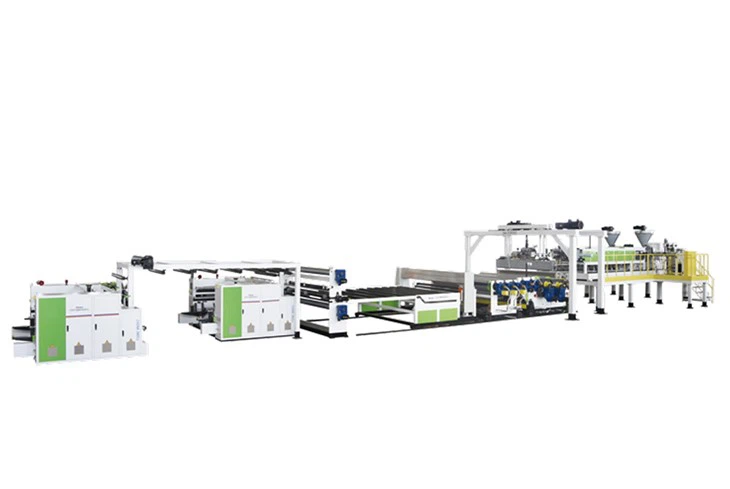
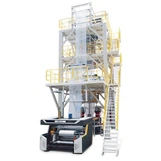
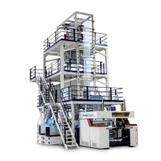
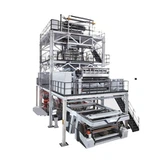
Eva Solar Film Extrusion Line
These films are widely used in photovoltaic module encapsulation, architectural laminated glass, automotive laminated glass, and hot-melt adhesive applications. The production line helps manufacturers achieve high production efficiency and consistent product quality while accommodating different production capacities and diverse industry requirements.
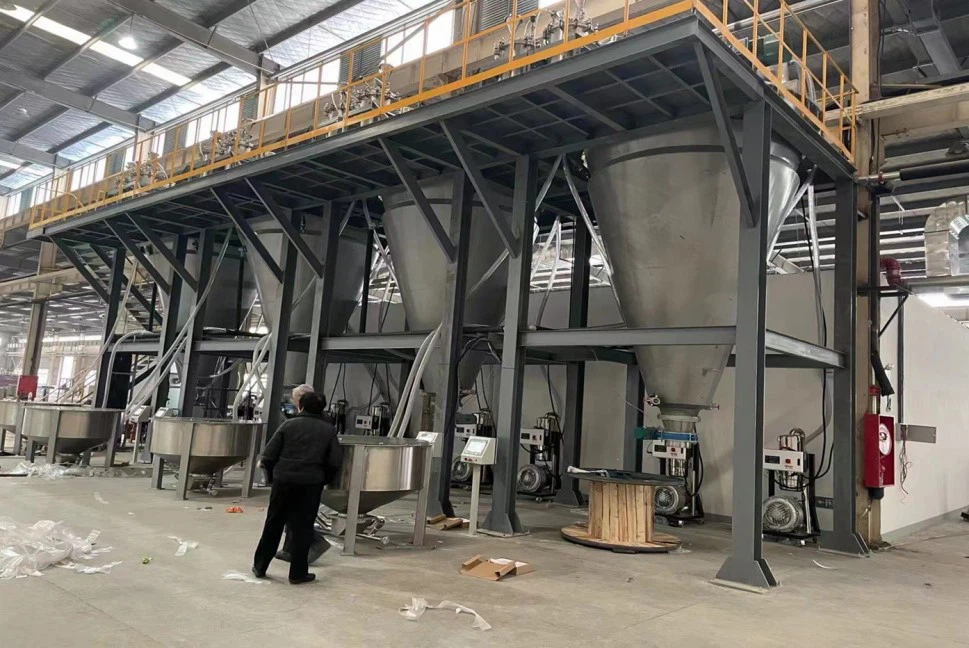
10-Cubic-Meter Compounding and Mixing Reactor
eva solar film extrusion line Core Components of the Production Line
This production line consists of several key units, including a raw material mixing reactor, extrusion system, screen changer / melt pump / die head, die head lifting mechanism, casting unit, online thickness gauge, optional online defect inspection system, transition cooling support and haul-off system, edge-trimming and slitting unit, automatic winding unit, auxiliary automatic roll unloading device, and an electrical control system.
All units operate in coordination to achieve a fully automated production process-from raw material mixing to finished roll winding. Each component is designed with a focus on precision, operational stability, and ease of operation. The main specifications and features are as follows:
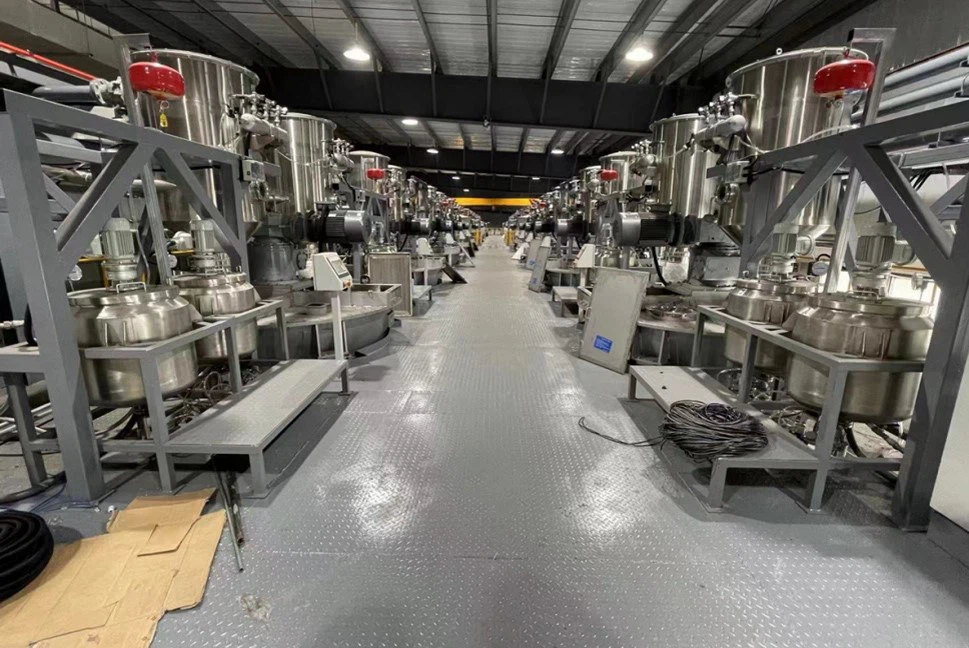
Raw Material Mixing Reactor
Structure Type
The vertical mixing reactor adopts a double-cone spiral structure, while the horizontal mixing reactor uses a ribbon-type mixing structure.
Metering and Mixing
Optional automatic gravimetric dosing and mixing systems are available for both powder and liquid materials, supporting mixing capacities of up to 10 m³ and ensuring precise raw material ratios from the start of the process.
Configuration and Layout
For large-scale production facilities, a centralized material feeding system can be adopted, which requires storage silos or turnover bins of the same specification as the mixing reactor.
The mixing section occupies a relatively large floor area, and the workshop height requirement is 9 meters (approximately 30 feet) or higher.
Extrusion System + Screen Changer, Melt Pump, Die Head + Die Head Lifting Mechanism
Key Components
Equipped with in-house "Jinhailuo" brand screws and barrels. The barrel and screw feature independent circulating cooling and temperature control. The die is equipped with an independent water-cooling temperature control system, and the melt metering pump is also controlled by an independent water-cooling system to ensure stable processing conditions.
Structural Design
The elbow flow channel adopts a split, dead-zone-free design to prevent material buildup. The screen changer is designed for easy disassembly and cleaning, while the melt pump pressure is controlled through an automatic closed-loop system for precise output stability.
A gantry-style lifting frame (die head lifting mechanism) is installed to facilitate roller removal, and the die head can be opened online for convenient cleaning and maintenance.
Auxiliary Design
The system adopts a reinforced integrated steel platform structure. Multiple options for online edge trim recycling are available, helping reduce raw material waste and improve overall material utilization.

eva solar film extrusion line Casting Unit
Drive and Control
The unit adopts a two-stage transmission system, making it easy to disassemble and replace rollers. It is equipped with high-precision servo drives and control systems, enabling accurate speed regulation and stable operation.
Cooling and Temperature Control
The rollers feature a high-efficiency heat-exchange flow channel design. The rubber roller uses an ultra-low-temperature cooling method, while the patterned steel roller is equipped with a dedicated roller temperature control unit. Multiple cooling roller configurations are available as optional setups.
Adjustment and Safety
The system provides electric adjustment for vertical and horizontal positioning, allowing flexible and precise operation. The nip rollers are equipped with protective guards and safety switches to ensure both operational flexibility and production safety.

Online Thickness Gauge + Online Defect Inspection
Online Thickness Gauge
This is a standard configuration that continuously monitors the thickness of the finished film in real time. It automatically adjusts extrusion parameters to maintain a stable thickness within the standard range of 0.2–1.0 mm.
Online Defect Inspection
This is an optional system selected by the customer. It can identify surface defects such as scratches, black spots, and bubbles. When abnormalities are detected, the system immediately alerts operators so adjustments can be made, helping prevent large-scale quality issues.
Transition Cooling Support Frame and Haul-Off System
Support Frame Design
The system uses an inward-folding support frame design with a fold edge length of 1.8 meters. The length of the cooling support frame can be customized as required. Transition rollers are lightweight anodized aluminum rollers, which help reduce equipment load.
Haul-Off Control
The haul-off unit is driven and controlled by a high-precision servo system. It operates in synchronization with the casting unit but can also be adjusted independently to accommodate different production speeds.
Expandability
Additional auxiliary equipment, such as thickness gauges and defect inspection systems, can be installed within the support frame according to production requirements, enhancing flexibility in online inspection and monitoring.

Haul-Off, Edge Trimming, and Slitting Unit
Drive and Control
The unit is powered by a high-precision servo drive system. It can operate in synchronization with the casting unit or be controlled independently, ensuring accurate and stable slitting performance.
Slitting Design
The system uses precision circular blades for cutting, with a pneumatic opening and closing mechanism for easy operation. The blade position can be flexibly adjusted and is equipped with a scale for accurate positioning. Blade replacement is simple, and the edge trimming width can be adjusted without stopping the machine, helping maintain continuous production.

Automatic Winding Unit + Auxiliary Automatic Roll Unloading System
Key Specifications
The system features a dual-shaft workstation design that allows alternating roll changes for continuous operation. The maximum winding diameter is 800 mm. It is equipped with a high-strength air shaft with a load capacity of over 500 kg. An optional auxiliary automatic roll unloading system can also be integrated to enable fully automated roll handling.
Drive and Control
The unit uses a high-precision servo drive and control system, supporting fully automatic roll start-up and roll changeover. A PLC control system with an integrated touchscreen interface enables centralized operation, while manual mode is also available when needed. The two winding stations operate independently, allowing flexible control to accommodate different production requirements.
Value-Added Features
The system supports network-enabled remote diagnostic services (internet connection required), making it easier to perform remote maintenance and troubleshoot equipment issues.

Electrical Control System
As the central control hub of the production line, the electrical control system coordinates the automated operation of all units. It enables precise parameter control, synchronized equipment operation, and real-time feedback on abnormal conditions. This system provides the technical foundation for fully automated production while ensuring stable and safe equipment performance.
eva solar film extrusion line Equipment Advantages and Technical Features
The production line is fully equipped with an intelligent automated control system. Combined with the specialized design of each functional unit, it focuses on three key aspects of production: precise raw material management, stable production operation, and strict product quality control.
By minimizing manual operation errors, the system significantly improves production efficiency and product qualification rates, demonstrating clear advantages in automation, precision, and production adaptability.
(1) Precise Feeding Control for Stable Material Ratios
- The production line is equipped as standard with a fully automatic gravimetric dosing system. Together with the automatic powder and liquid metering and mixing functions of the raw material mixing reactor, it enables independent measurement and continuous feeding of solid base materials and liquid additives.
- This effectively resolves common industry issues associated with traditional feeding methods, such as inaccurate dosing, uneven mixing, and unstable formulations.
- Since EVA and POE materials are highly sensitive to formulation ratios, the system utilizes dynamic calibration and closed-loop control to minimize performance variations caused by feeding fluctuations. This ensures precise and consistent material ratios for every production batch, preventing deviations in film crosslinking performance, light transmittance, and bonding strength.
- At the same time, it reduces raw material waste and lowers overall material loss costs for manufacturers.
(2) Multi-Stage Tension Control to Reduce Film Deformation
Because EVA and POE materials have high elasticity, are prone to stretching deformation, and exhibit shrinkage characteristics, the production line is equipped with independent tension control units in the cooling section, haul-off section, and winding section.
The tension in each section can be flexibly adjusted according to the material properties. During high-speed operation, the system continuously monitors film tension and automatically adjusts operating parameters in real time.
Through coordinated multi-point control, the system effectively reduces issues such as:
- film stretching deformation
- wrinkling
- web misalignment
- tearing or breakage
This ensures stable film transport and winding, lowers scrap rates caused by abnormal tension, and guarantees uniform thickness and stable dimensions in the finished product.
(3) Online Monitoring System to Ensure Product Quality
The production line integrates two key monitoring systems:
- Online automatic thickness measurement
- Online defect detection (optional)
- These systems enable real-time monitoring of encapsulation film quality and synchronized data feedback, ensuring full-process quality control without requiring extensive manual inspection after production.
- The online thickness gauge continuously monitors film thickness and automatically adjusts extrusion parameters when necessary. The defect detection system identifies surface defects and alerts operators in real time so adjustments can be made promptly.
This approach helps prevent quality issues during production and ensures that finished products consistently meet specification requirements.
(4) Multiple Machine Configurations with Customizable Options
- eva solar film extrusion line can be flexibly configured according to production requirements, supporting both single-extrusion and multi-layer co-extrusion structures.
- Available configurations include single extrusion lines and co-extrusion lines, with different extruder sizes to accommodate customized production capacity and product specifications. This allows the system to meet the needs of companies of different sizes.
- The equipment features a modular design, making it easy to upgrade the system or adjust the production process in the future. Whether switching between multiple product specifications or maintaining continuous large-scale production, parameters and configurations can be optimized according to actual requirements.
- Single extrusion lines are ideal for small and medium production volumes and companies with limited initial investment.
- Co-extrusion lines are designed for large-scale, high-efficiency manufacturing, with maximum extrusion output reaching 1,100 kg/h, making them well suited for large photovoltaic material manufacturers.
(5) Fully Automated Operation to Reduce Operating Costs
With the automated design of each unit and centralized coordination through the electrical control system, the production line achieves fully automated operation throughout the entire production process, including:
- raw material feeding
- mixing and blending
- extrusion
- casting
- inspection and monitoring
- finished roll winding and unloading
Only a small number of skilled operators are required to oversee parameter monitoring, equipment maintenance, and exception handling, significantly reducing labor requirements and associated costs.
In addition, the automated design minimizes human error, improves production efficiency, and enhances product consistency. The system's stable operation and low failure rate reduce maintenance costs and downtime losses, ultimately lowering the overall operating costs for manufacturers.
eva solar film extrusion line Main Technical Specifications
The following technical parameters have been verified through long-term industrial production and comply with the operational standards of the production line. The finished film thickness is consistently maintained within the range of 0.2–1.0 mm.
The extruder configurations and maximum output capacities for different machine models are listed below, providing a reliable reference for equipment selection.
|
Model |
(Extruder type) |
Products thickness(mm) |
Max. output(kg/h) |
|
Single extrusion |
JWS200 |
0.2–1.0 |
500–600 |
|
Co-extrusion |
JWS160+JWS180 |
0.2–1.0 |
750–850 |
|
Co-extrusion |
JWS180+JWS180 |
0.2–1.0 |
800–1000 |
|
Co-extrusion |
JWS180+JWS200 |
0.2–1.0 |
900–1100 |
Application Areas
The EVA/POE encapsulation films produced by this production line offer excellent overall performance. With strong adhesion, stability, weather resistance, and electrical insulation properties, they are widely used across multiple industries, including photovoltaics, construction, and automotive manufacturing. These films can meet the diverse performance requirements of different industries. Typical application scenarios are as follows:
(1) Photovoltaic Module Encapsulation (Primary Application)
-
The primary application is the production of EVA and POE photovoltaic encapsulation films, which serve as critical materials in solar modules.
-
After lamination and curing, the encapsulation film bonds the solar cells, provides sealing protection, and enables efficient light transmission. As a result, it directly affects the long-term reliability and performance of photovoltaic modules.
- The film effectively protects solar cells by preventing moisture and dust intrusion while reducing oxidation and material degradation. This helps extend the service life of solar modules and improve power generation efficiency.
- The encapsulation film is compatible with various photovoltaic module structures, including single-glass modules, double-glass modules, and N-type modules. With the continued global growth in photovoltaic installations, demand for solar encapsulation films remains strong, creating significant market opportunities for this production line.
(2) Applications in the Construction Industry
-
In the construction sector, the films are primarily used in architectural curtain wall encapsulation, laminated architectural glass, and skylight glazing systems.
-
With excellent adhesion, stability, and weather resistance, the films enhance the structural integrity and safety of glass products. In addition, they provide thermal insulation and sound insulation benefits, helping reduce building energy consumption.
- These characteristics align well with modern building trends emphasizing energy efficiency, environmental sustainability, and low-carbon development.
(3) Applications in the Automotive Industry
-
In automotive manufacturing, the films are used for laminated automotive glass encapsulation.
-
They significantly improve glass strength and safety by preventing shattered glass from scattering during impact, thereby reducing safety risks for drivers and passengers and meeting automotive safety standards.
- Additionally, their sound insulation and thermal insulation properties enhance driving comfort, while their strong adhesion and weather resistance meet the demanding requirements of high-performance automotive encapsulation materials.
(4) Applications in Other Industries
-
The films can also be used in hot-melt adhesive production, supporting bonding applications in industries such as packaging, printing, and furniture manufacturing.
-
Furthermore, they can serve as insulation and encapsulation materials for electronic devices and new energy batteries. With excellent electrical insulation and weather resistance, these films provide reliable protection for sensitive components.
- These additional applications further expand the usage scope of the production line and increase its overall market potential.
Equipment Selection Recommendations
Based on a company's production scale, product positioning, market demand, and initial investment budget, the following recommendations can help manufacturers select the most suitable equipment configuration. These suggestions are intended to reduce equipment selection costs, improve production efficiency, and accurately match different production requirements.
1. For Small to Medium Production Operations
For companies with moderate production capacity, limited initial investment, and a focus on producing standard encapsulation films without special performance requirements, the single extrusion line (JWS200) is recommended.
This model offers excellent cost performance and simple operation, while effectively balancing production capability and cost control.
2. For Large-Scale Production
For companies pursuing high production efficiency and large-scale manufacturing, and those requiring the ability to produce encapsulation films with multiple specifications and performance characteristics, co-extrusion lines are recommended.
- JWS180 + JWS200 Co-Extrusion Line
This configuration provides the highest production capacity, with a maximum extrusion output of up to 1,100 kg/h, making it ideal for large photovoltaic material manufacturers with high-volume production requirements.
- JWS160 + JWS180 or JWS180 + JWS180 Co-Extrusion Lines
These configurations offer moderate production capacity and can be flexibly selected according to the company's actual production planning, balancing production efficiency with investment cost.
Overall Value of the eva solar film extrusion line
- The EVA/POE Solar Encapsulation Film Production Line integrates advanced automation technology with specialized process engineering to address key challenges in the manufacturing of photovoltaic encapsulation films, including inaccurate raw material ratios, film deformation during processing, difficulty in maintaining consistent product quality, and high labor costs. By solving these industry pain points, the production line helps manufacturers reduce costs, improve efficiency, enhance product quality, and strengthen market competitiveness.
- In addition to meeting the large-scale production demands of the photovoltaic industry, the production line is also suitable for manufacturing advanced encapsulation materials used in construction, automotive, electronics, and electrical applications. It aligns well with international market demand for high-efficiency, high-precision, and cost-effective production equipment, offering significant market value and strong growth potential.
- As the renewable energy sector continues to expand and green, low-carbon development becomes a global priority, this production line will support the advancement of the photovoltaic industry and related sectors, contributing to the sustainable growth of the green energy economy.
Hot Tags: eva solar film extrusion line, China eva solar film extrusion line manufacturers, suppliers, factory


- Tel: +8613816974389
- Email: salsz@jwell.cn
- Add: Shanghai Haining Suzhou Changzhou Zhoushan Chuzhou Thailand Spain