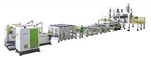
The value of photovoltaic adhesive film is not high, accounting for about 4% to 7% of the module cost. However, due to the irreversibility of module packaging and the requirement of operating life of more than 25 years, once the adhesive film starts to yellow and crack, the battery is prone to failure Scrap, so the adhesive film plays a key role in the quality and life of photovoltaic modules.
As the absolute leader in the photovoltaic adhesive film industry, Foster has a global market share of about 57.42% in 2020, far exceeding Sveck (14.13%) and Haiyou New Materials (10.79%).
It will only happen when the adhesive film wants to fight a price war. It should not happen in the past two years. The market dividend is still there. In addition, small companies cannot get top customers. There are many lines and models, and there is not enough formula system and research and development capabilities, production stability, and process adjustment space to meet the production requirements of so many bases.

Domestic POE progress
As of 2022, there is no industrialized production of POE devices in China. Currently, all POE particles in China rely on imports. According to statistics, as of today, the total production capacity of POE in the world is about 2.35 million tons. This is POE in a broad sense, which includes traditional POE, as well as the production capacity of POE production lines of foreign manufacturers, propylene-based elastomers, EPDM, etc. on the same line. Dow has the largest production capacity, accounting for 1/3 of the world, about 40% of the level. According to statistics, the demand for single POE applied to photovoltaic film, automobile modification, wire and cable, etc. in 2022 will be about 1.45 million tons. Among them, China's consumption will account for 65 tons in 2022, accounting for 45% of the world, and all imports will be the mainstay. Wanhua's research progress is faster because of its better R&D capabilities, but in terms of application, the pilot plant also has difficulties and problems. Liaoning Dingjide has become popular recently. It started to focus on catalysts. The reason why it entered the POE project is that it has achieved some results in catalyst research and development, especially in metallocene catalyst research and development.
The same is true for the co-catalyst. The co-catalyst is actually added with pagoda and aluminum alkyl. The current domestic progress is that the company is doing research and application on the basis of purchasing foreign catalysts. There is no problem in terms of device compatibility, but whether the final product is qualified or not has a greater impact on performance stability. This requires domestic industrialized devices to be put into production. In order to truly verify how the domestic technology is. The domestic echelon situation: on the one hand, the POE project reserve situation, and on the other hand, the pilot plant of related products can be heard and seen in the market. If there is no problem with the POE pilot plant, it will play a vital role in the industrial scale-up role. Judging from this, in 2024, the first echelon Jingbo and Wanhua may be put into production first, of which Wanhua's production capacity will be put into production in batches, not as large as 400,000 tons as he advertised. Wanhua will put into production 200,000 tons by 2025, and Chambord will have about 50,000 tons.
In addition, the commissioning time of other devices will be delayed in the future, because firstly, there is no mature supporting device construction, and secondly, there is no pilot plant construction. Generally speaking, the companies mentioned above will put POE devices into production in the next three years. In 2022, China's POE consumption in the photovoltaic film industry will be about 270,000 tons, Dow will be about 150,000 tons, LG will be about 80,000 tons, and Mitsui will be about 30,000 tons. Sabic will realize POE photovoltaic material production in September and October 2022. The supply is 10,000-20,000 tons. According to the data in 2022, theoretically, in 2023, it is expected that the consumption of POE for photovoltaic film in China will double every year. But considering the practical issues, one is the supply issue, and the other is the price issue. The price difference between photovoltaic grade POE and photovoltaic grade EVA is quite large, and downstream photovoltaic film manufacturers will not use POE regardless of cost. It is speculated that the consumption of photovoltaic film in 2023 will be about 350,000-360,000 tons, and the supply will increase by about 70,000-80,000 tons. The increase is mainly due to the increase in the volume of Dow and LG. It is estimated that in 2023, Dow's photovoltaic supply to China will be about 180,000-200,000 tons, and LG will be about 100,000-120,000 tons. Sabic's photovoltaic supply is about to increase, 30,000-50,000 tons. Mitsui is relatively stable, maintaining around 30,000 tons. In 2023, the total supply from foreign suppliers to China is expected to be 370,000-380,000 tons.
In terms of application, carbon 8 is better than carbon 4. However, because the current prosperity of downstream industries is very poor, such as the automobile industry, cable industry, shoe material foaming, hot-melt adhesives, etc., the expectations for the next few years are relatively poor, so in terms of cost orientation, more and more companies will start from 2022 The customer switched from Carbon 8 POE to Carbon 4 POE. Carbon 8 POE is used for specific high-end products, and carbon 4 performance can basically meet the requirements for general-purpose products. It can also be seen from the changes in Dow’s supply that Dow’s POE production has always been mainly carbon 8 POE, while LG’s POE production is mainly carbon 4, including its supply to China’s automotive field, photovoltaic film field, etc. It is mainly carbon 4, because the cost of carbon 4 is relatively low, forcing LG. According to statistics, in 2022, Dow’s supply of carbon 4 to China has exceeded the supply of carbon 8. From the analysis of both ends, China’s POE will be dominated by carbon 4 in the future. According to statistics in 2022, the proportion of carbon 4 and carbon 8 will each account for 50%. , carbon 4 or even more, the future development trend is that the proportion of carbon 4 POE production and application will gradually increase, and after 2026 it will reach the level of carbon 4: carbon 8 = 7: 3.
The price reduction of silicon materials drives the release of demand
With the continuous launch of domestic polysilicon production capacity, the price of polysilicon has continued to drop since the end of August. According to wind data, the current price of photovoltaic-grade polysilicon is US$17.51/kg, which is 54% lower than the high point in 22 years. The photovoltaic industry chain is about to increase. Module manufacturers have recently raised their production schedules for January. 1. POE particles are currently completely dependent on imports. From this, it can be judged that enterprises that already have a POE film production scale have a better cooperative relationship with upstream companies, and it is easier to obtain raw materials (big customers) at a price that is lower than the average cost of the industry. 2. In terms of supply and demand, 23~25 is tight, and 26 begins to oversupply. 3. On the demand side, photovoltaic film manufacturers are also constantly adjusting their processes. If the price of POE film is too expensive, the proportion of EPE film will increase to replace some POE film. Therefore, the expected demand needs to be further judged according to the actual market price. Overall, The actual demand may be lower than the demand brought by the expected Topcon battery installation.
4. On the supply side, many major domestic chemical plants are doing pilot tests, and the scale of planned construction capacity is not small. 5. Profitability of the film factory: In 23 years, due to the continuous outbreak of demand, the price of POE particles will maintain a high level, and it may further rise slightly. If the raw material rises and the downward transmission is not smooth, it will have adverse factors for the film company, but the silicon material will fall It will bring price fluctuations to other links in the photovoltaic industry. It is expected that the price increase of POE particles will be transmitted downwards, but how much it can be transmitted and whether it will greatly affect the gross profit rate requires further attention. 6. POE film manufacturers: At present, domestic enterprises with POE film production capacity: the leader is still Foster, and the others are Haiyou New Materials, Mingguan New Materials, and Saiwu Technology.

Contact Alice Yang: + 8613816974389 (WhatsAPP, Wechat, Tel)